
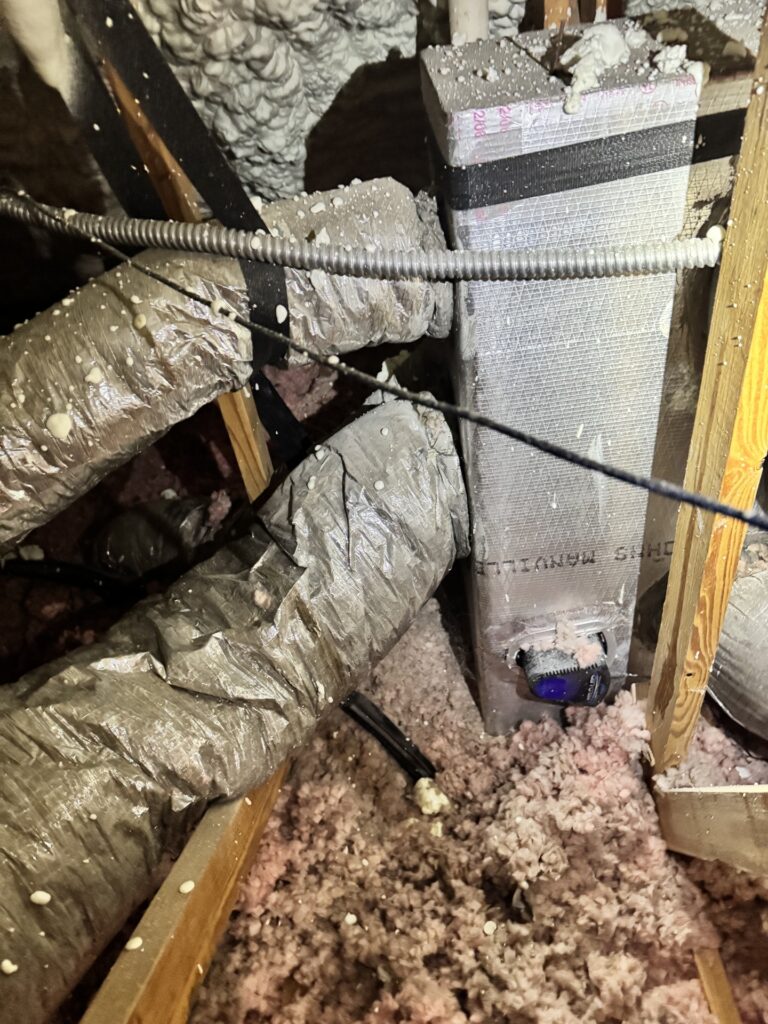
Your air-conditioning system depends on properly sized ductwork to move cooled air throughout your home. When the ducts are too small, the system must work harder to deliver the airflow your home needs.
This is a common problem in homes throughout San Juan, McAllen, Mission, Edinburg, Pharr, and the Rio Grande Valley. Even a new, high-efficiency air conditioner may struggle when connected to undersized or poorly designed ductwork.
Why Proper Duct Size Matters
Your AC system is designed to move a specific amount of air, measured in cubic feet per minute, or CFM. The duct system must be large enough to carry that airflow without creating excessive resistance.
Think of it like trying to breathe through a small straw. Air can still pass through, but it takes much more effort. The same thing happens when an HVAC blower tries to force air through ducts that are too small.
Problems Caused by Undersized Ductwork
Weak Airflow From the Vents
Small ducts restrict the amount of air reaching each room. You may notice weak airflow from certain vents, especially in rooms farther away from the air handler.
Uneven Temperatures
Some rooms may feel comfortable while others remain warm or humid. Homeowners often blame the AC equipment, but the actual problem may be that the ductwork cannot deliver enough conditioned air to every room.
High Static Pressure
Static pressure is the resistance your HVAC system must overcome to move air. Undersized ducts can create excessive static pressure, making it harder for the blower motor to circulate air.
This can reduce system performance and place additional strain on the blower motor and other components.
Longer Running Times
When the system cannot move enough air, it may take longer to reach the thermostat setting. Longer run times can increase electrical consumption and contribute to higher utility bills during the hot South Texas summer.
Frozen Evaporator Coil
Restricted airflow can cause the evaporator coil to become too cold. Moisture may freeze on the coil and eventually block airflow completely.
A frozen coil does not automatically mean the system is low on refrigerant. Airflow problems—including dirty filters, dirty coils, blower issues, or undersized ductwork—can produce similar symptoms.
Excessive Noise
Whistling vents, loud returns, or rushing-air sounds may indicate that the duct system is trying to move too much air through an opening that is too small.
Poor Humidity Control
Humidity is a major concern in the Rio Grande Valley. Improper airflow can affect the system’s ability to remove moisture and keep the home comfortable.
The result may be a home that reaches the thermostat setting but still feels sticky or humid.
Premature Equipment Wear
A restricted duct system can place unnecessary stress on the blower motor and other HVAC components. Over time, this may contribute to breakdowns, reduced efficiency, and a shorter equipment lifespan.
Will Installing a Bigger AC Fix the Problem?
Not necessarily. Installing larger equipment on the same undersized ductwork can make the problem worse.
A larger system generally requires more airflow. If the existing ducts cannot handle it, static pressure may increase, airflow may remain inadequate, and the new system may still fail to keep the home comfortable.
Before replacing an AC system, the equipment size and duct capacity should be evaluated together. A Manual J load calculation helps determine how much heating and cooling the home needs, while proper airflow measurements help determine whether the duct system can support the selected equipment.
Signs Your Home May Have Undersized Ducts
Your ductwork may need to be evaluated if you notice:
- Weak airflow from multiple vents
- Rooms that are difficult to cool
- Large temperature differences between rooms
- Loud or whistling supply vents
- A noisy return-air grille
- Frequent evaporator coil freezing
- Long AC run times
- High electricity bills
- Excessive indoor humidity
- Blower motor problems
- Problems that started after installing a larger AC system
These symptoms can also have other causes, so the system should be tested before recommending duct replacement or modification.
How We Evaluate an Airflow Problem
At JL Cooling & Heating, we look at the complete HVAC system rather than guessing based on equipment size alone. An airflow evaluation may include:
- Measuring total external static pressure
- Checking supply and return-air restrictions
- Evaluating duct sizes and layout
- Inspecting filters, coils, grilles, and dampers
- Checking blower settings and system airflow
- Comparing the duct system with the equipment’s airflow requirements
- Looking for damaged, disconnected, or collapsed ducts
Depending on the findings, the solution may involve enlarging certain ducts, adding return-air capacity, correcting restrictive transitions, adjusting airflow, or redesigning part of the duct system. A complete duct replacement is not always necessary.
Professional Ductwork and Airflow Evaluation in the Rio Grande Valley
Properly sized ductwork can improve comfort, reduce noise, support better humidity control, and help your HVAC equipment operate as designed.
If your AC runs constantly, has weak airflow, freezes repeatedly, or cannot cool certain rooms, the duct system may be part of the problem.
Contact JL Cooling & Heating LLC for professional HVAC airflow and ductwork service in San Juan, McAllen, Mission, Edinburg, Pharr, and surrounding Rio Grande Valley communities.
Call: 956-569-4838
Visit: https://jlcandh.com
JL Cooling & Heating LLC — We don’t sell what you don’t need.
Suggested SEO title: Undersized Air Ducts: Warning Signs and Problems | RGV HVAC
Suggested URL: /undersized-air-ducts-rio-grande-valley/
Meta description: Learn how undersized air ducts cause weak airflow, uneven cooling, high energy bills, frozen coils, and humidity problems in Rio Grande Valley homes.