
When an expensive part fails on your air conditioning system, one of the first questions your HVAC contractor should ask is:
Is this equipment still covered by the manufacturer’s warranty?
Recently, a homeowner with a new-construction home contacted us after another contractor told him his air conditioning system was no longer under factory warranty and recommended replacing the system.
Something didn’t sound right to the homeowner.
He knew he had owned the home for less than five years, so he contacted JL Cooling & Heating LLC and asked us to take another look.
We’re glad he did.
We Checked the Warranty Before Recommending Replacement
Instead of assuming the equipment was out of warranty based only on its age, we looked further into the history of the system.
After verifying the information, we determined that warranty coverage was available and were able to submit the condenser fan motor as a manufacturer warranty claim.
That made a significant difference for the homeowner.
The lesson is simple:
Before replacing an AC system because of a failed component, verify the manufacturer’s warranty carefully.
Why AC Warranty Dates Can Be Confusing
Determining the warranty status of HVAC equipment isn’t always as simple as looking at the manufacture date on the serial number.
Depending on the manufacturer, warranty terms, registration status, and circumstances, there may be several dates or records worth investigating.
1. Equipment Manufacture Date
The model and serial number can often be used to determine approximately when the equipment was manufactured.
But the date an air conditioner was manufactured isn’t necessarily the same date the homeowner’s warranty coverage began.
Equipment can be manufactured and then spend time in distribution or inventory before being installed.
2. Equipment Sale or Installation Records
Another important piece of information may be when the equipment was sold or installed.
Invoices, distributor records, registration information, and installation documentation can sometimes help establish the history of the HVAC system.
3. Closing Date on a New-Construction Home
This is particularly important for homeowners purchasing new construction.
The HVAC equipment may have been manufactured and installed months before the homeowner actually closed on the property.
Depending on the manufacturer’s applicable warranty terms, the home’s closing or purchase documentation may be important when establishing the warranty start date.
This is why homeowners should keep their closing documents and HVAC paperwork.
Manufacturer warranty requirements vary, so the actual warranty terms for the specific brand and equipment always need to be verified.
Don’t Assume an Older Manufacture Date Means No Warranty
Imagine an air conditioner manufactured well before a new home was completed.
If someone looks only at the serial number and manufacture date, they could potentially reach the wrong conclusion about warranty coverage.
For new-construction homes, we believe it is worth asking additional questions:
When was the home completed?
When did the homeowner close on the property?
When was the equipment installed or sold?
Was the equipment registered?
What does the manufacturer’s warranty policy say for new construction?
A few extra minutes of investigation could potentially save a homeowner from paying for a part that qualifies for warranty coverage—or from unnecessarily replacing equipment.
HVAC Warranty Registration Can Also Matter
Homeowners should also understand that manufacturer warranties aren’t all the same.
Depending on the manufacturer, equipment registration may affect the length or type of warranty coverage available.
Some manufacturers provide different coverage for properly registered equipment, while other circumstances—such as new construction—may have their own requirements.
That’s why we recommend keeping records of:
- HVAC model and serial numbers
- Installation paperwork
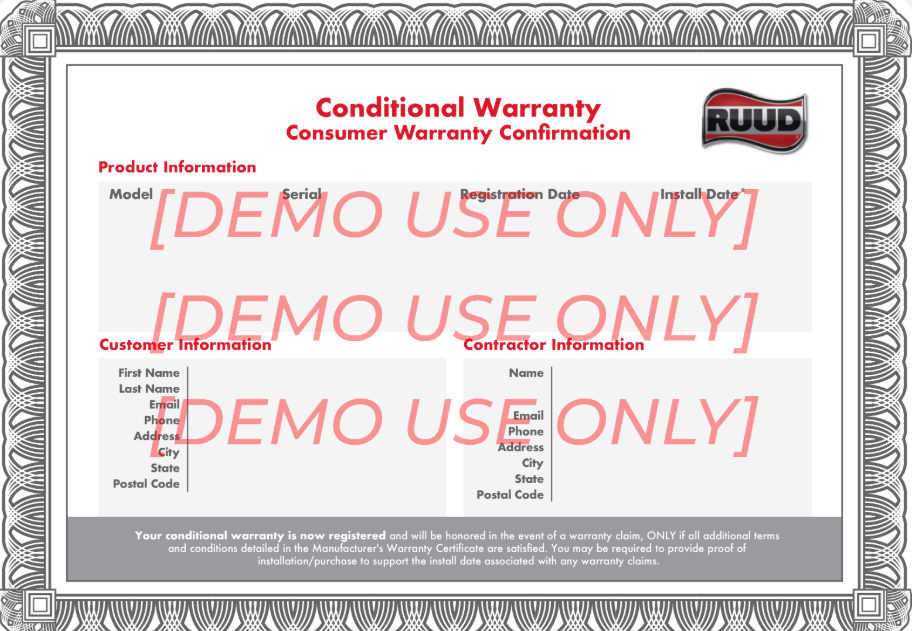
- Warranty registration confirmation
- Builder information
- Purchase invoices when available
- New-home closing documents
- Previous HVAC service records
Having this information available can make warranty verification much easier when a component fails several years later.
A Failed Part Doesn’t Automatically Mean You Need a New AC
There are situations where replacing an older air conditioner makes financial sense.
But a failed motor, circuit board, compressor, coil, or another component shouldn’t automatically become a system replacement without evaluating the equipment first.
We believe homeowners deserve to know their options.
Before recommending replacement, a contractor should consider the age and condition of the equipment, repair cost, refrigerant type, efficiency, history of failures, and available manufacturer warranty coverage.
Sometimes replacement is the right decision.
Sometimes repair is the better decision.
And sometimes the failed component may still be covered by the factory warranty.
Details Matter in HVAC Service
The experience with this homeowner is a good reminder of why asking questions matters.
The first contractor reportedly determined that the equipment didn’t have warranty coverage and attempted to sell the homeowner a replacement system.
The homeowner questioned that conclusion because he knew the home wasn’t even five years old.
After we investigated further, we were able to submit the condenser fan motor for warranty consideration.
Taking the time to verify the details can make a real difference for a homeowner.
At JL Cooling & Heating LLC, our goal isn’t to replace equipment simply because something failed. We want to determine what’s wrong, understand the available options, and provide the homeowner with the information needed to make an informed decision.
Think Your AC Might Still Be Under Warranty?
If you’re having an AC repair problem in San Juan, McAllen, Edinburg, Mission, Pharr, Alamo, or the surrounding Rio Grande Valley, don’t assume your system is out of warranty simply because someone tells you it is.
Especially with a new-construction home, there may be additional information that needs to be considered.
Have your model number, serial number, installation information, and new-home closing date available. The manufacturer’s specific warranty terms can then be reviewed to determine whether coverage may still apply.
A little research could potentially save you from an unnecessary expense.
JL Cooling & Heating LLC
We don’t sell what you don’t need.